Vocus was growing faster than its story could keep up.
The business had become a serious digital infrastructure business and the brand hadn’t caught up with it. Social said one thing, the intranet said another, the careers pages said something else again, and the internal communications platform looked different to all of it. Each one had been built by people doing good work, just doing it separately, which is how most large businesses end up sounding like several different companies at once.
I was brought in to review the internal platforms and some of the external ones. Fairly quickly it was obvious that treating them as separate jobs was the problem. The people reading the intranet are the same people the careers pages are trying to attract, and they can all see the Instagram. If the company sounds like multiple different places, it comes across unclear and unprofessional.
So the recommendation was to stop running them as separate channels and run them as one employer brand with one voice.
What I found while I was in there mattered just as much. The team was doing an enormous amount by hand. Work that should have taken an hour was taking a day, and processes had grown around tools rather than the other way around. That has a direct effect on the brand, even though it never looks like a brand problem. When everything is manual, you publish less often and inconsistency creeps in by accident rather than by choice.
So I rebuilt the workflows underneath as well. Simpler processes, fewer steps, foundations that could hold the volume the business was moving at.
In a business that size, the harder part is navigating the processes. There are structures and sign-offs and good reasons for both, and plenty of ideas die quietly in them. What gets through is change that can be articulated properly: what it costs and what happens if we don’t make it. Being able to explain the outcome rather than just the idea is what earned the trust to start making the changes at all.
What changed
Vocus now earns more engagement on LinkedIn than any of its competitors, despite having a smaller following than most of them. Per thousand followers it outperforms the largest of them by a significant margin.
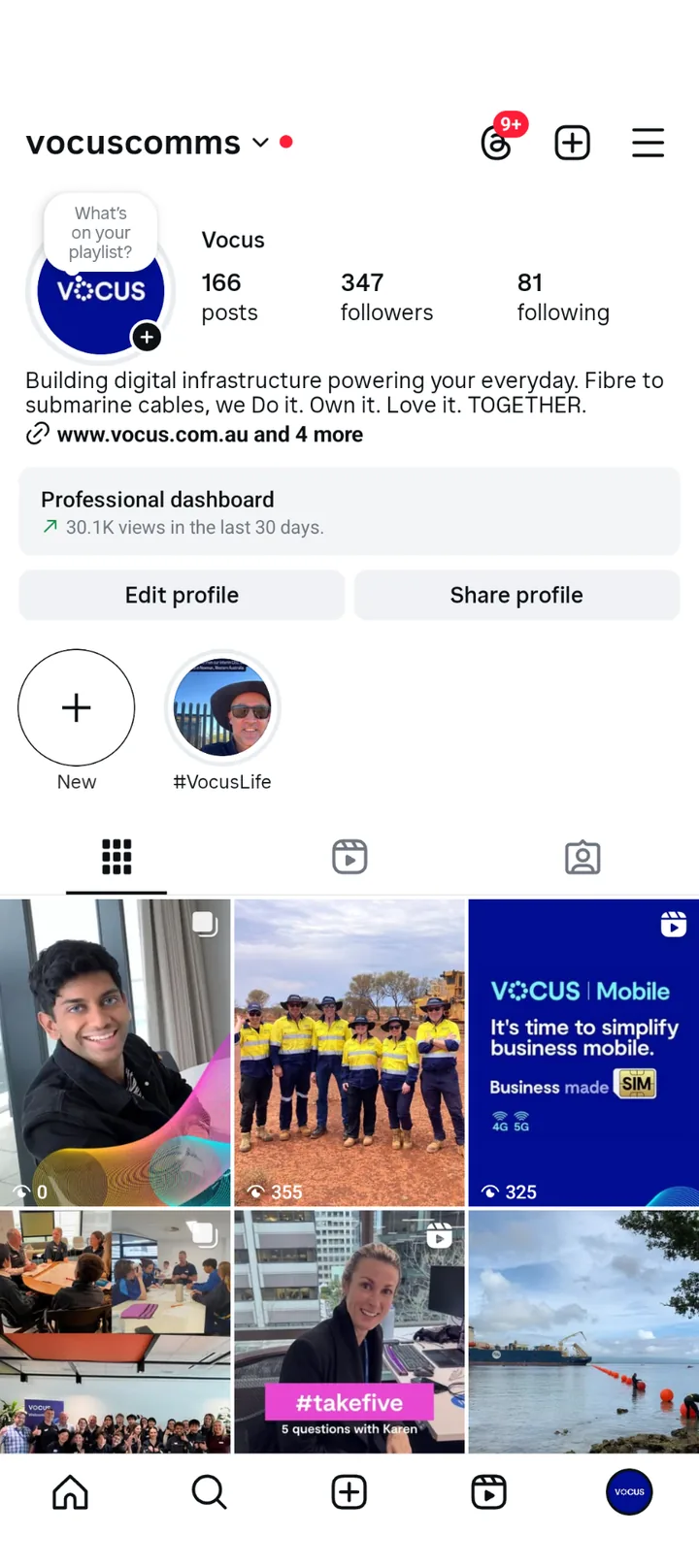
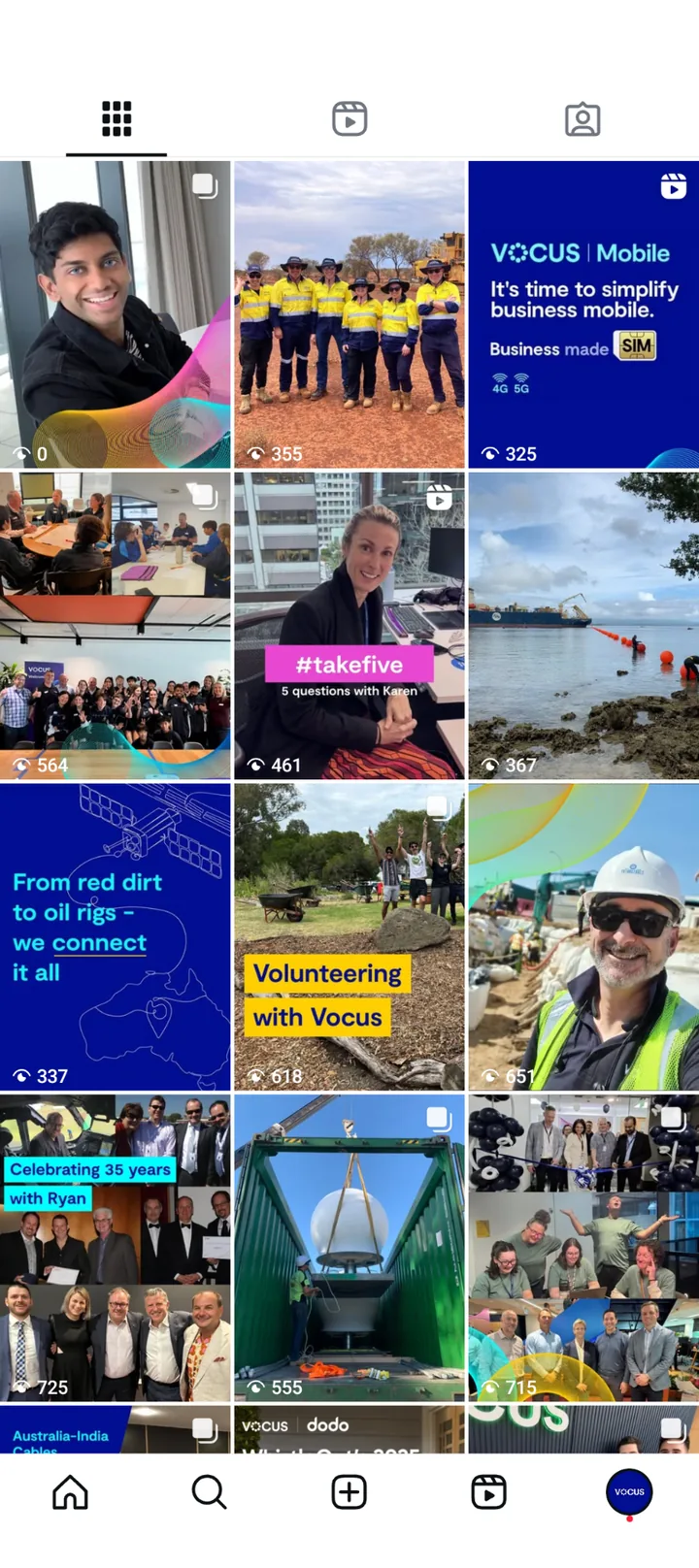
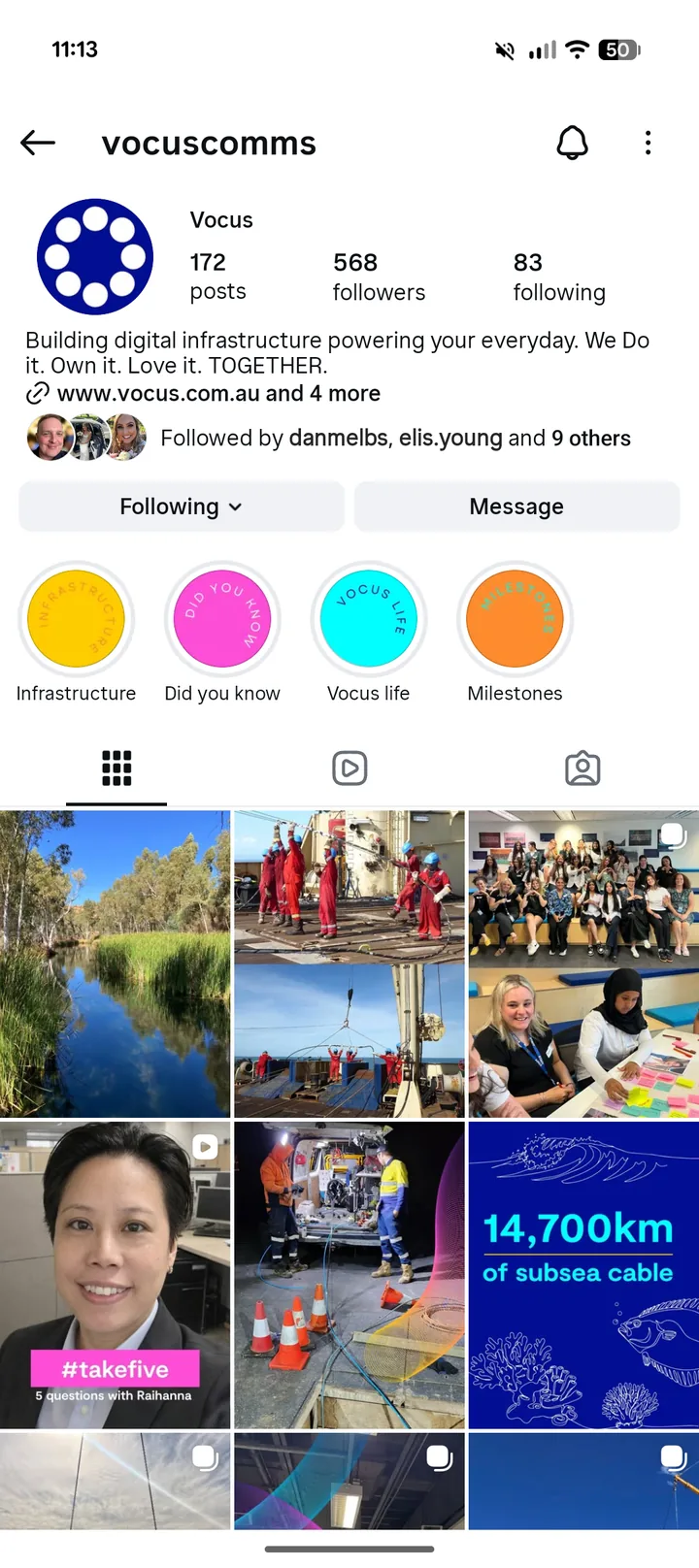
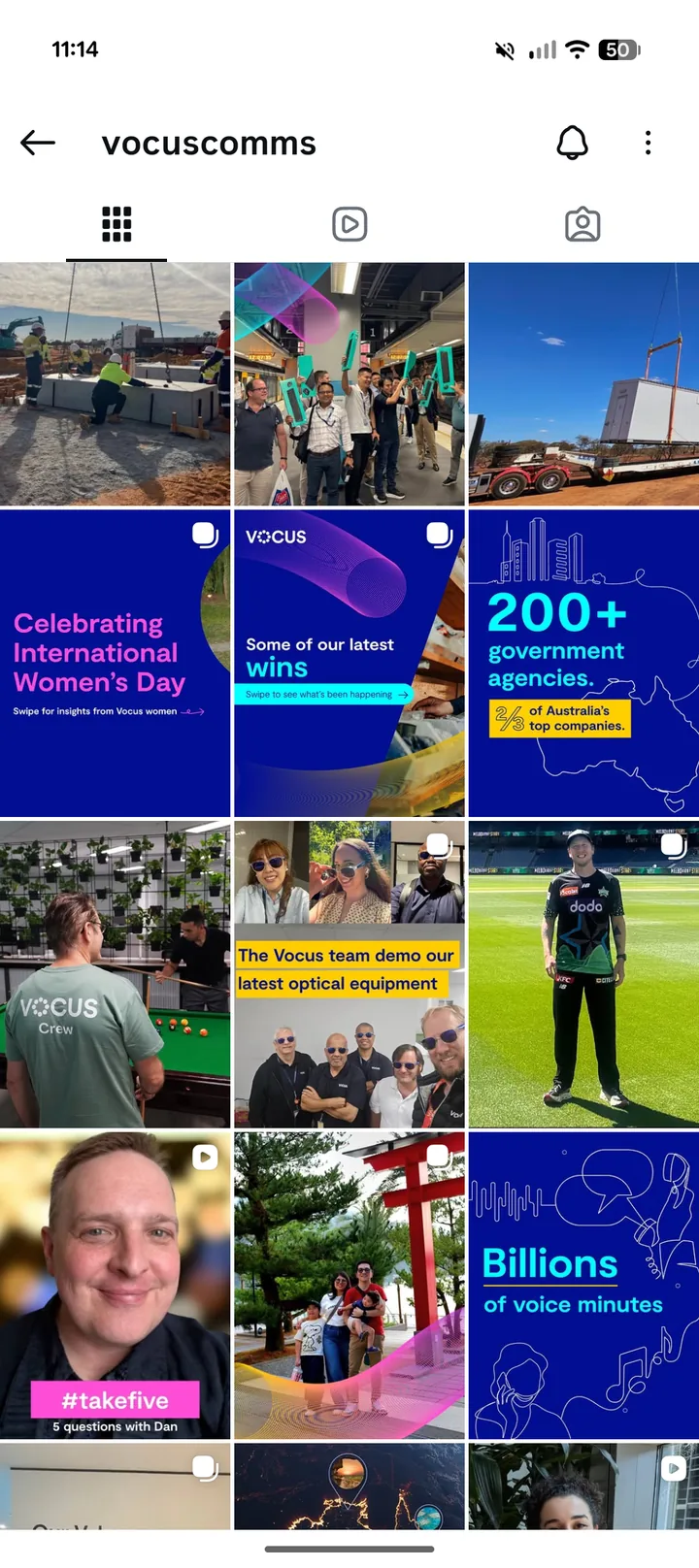
On Instagram, organic growth reached 58% in ten months.
Internally, 94% of people on the employee platform see at least one post a month, and more than half of all staff open an all-staff email. For internal communications, those are numbers most businesses don’t get close to.
And the pattern underneath all of it is consistent. Posts where real people are visible earn around eight times the engagement of abstract company explainers. Which is the same thing that was true at the start: a company sounds like a company until you let the people in it speak.